I might pay attention to graduation speeches each year more than the average person. Despite missing my own graduation to work overseas, and sitting in torrential rain during for my graduate degree commencement ceremony a few years later, I then had the joy of working at Harvard University’s commencement ceremonies for more than a decade, including several years of being a commencement marshal, top hat and baton included. I’ve heard dozens of graduation speeches from world leaders, luminaries, academics, and celebrities, and despite being out of that world now, I still can’t help paying attention to some of the themes that pop up in speeches each year.
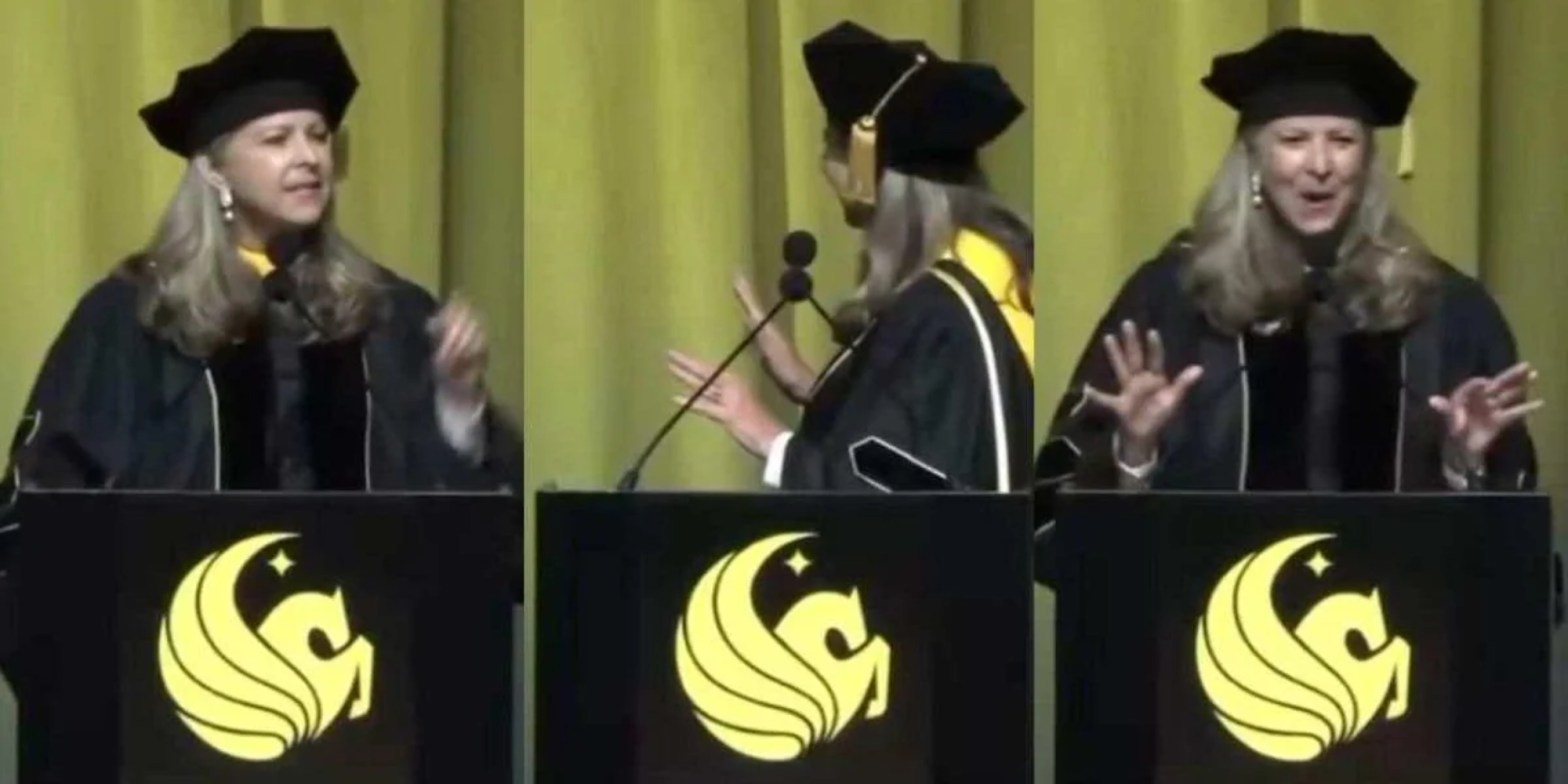
AI is a common theme in speeches this year, but what the audience is left with isn’t always what was intended by the speaker. At the University of Central Florida, Tavistock Development Company’s Vice-President Gloria Caulfield proudly said, “the rise of Artificial Intelligence is the next industrial revolution” and was taken aback by the immediate round of booing she heard in response, asking those on stage with her, “What happened?” She continued, “Only a few years ago, AI was not a factor in our lives,” resulting in loud cheers. Caulfield appeared bewildered and a little shaken. UCF graduates later said in interviews that the speech was “tone-deaf.” “The whole speech praising AI was out of touch with reality and left many of us feeling upset and not inspired,” said one. Another said he felt pro-AI business people were trying to “force a state of acceptance about something hostile to not only our livelihood but the environment and the livelihood of people living near data centers.”
Meanwhile, at Middle Tennessee State University, Big Machine Records CEO Scott Borchetta (who famously sold the master recordings of the artist he signed in 2005, Taylor Swift) was combative, stating “AI is rewriting production as we sit here.” In response to booing, he retorted, “Deal with it.” The University of Arizona brought in former Google CEO Eric Schmidt was booed throughout his speech as he pitched AI as the future, and asked, “…will you help shape Artificial Intelligence?” (Setting aside his AI stance, Schmidt was already a controversial choice to speak because of ongoing litigation regarding sexual assault allegations.)
Harvard University’s Commencement speaker Conan O’Brien touched on AI only in jokes (“Luckily, AI is not a problem at Harvard,” he said. “Here, professors have been able to quickly flag students’ use of AI, thanks to the sophisticated AI software they use to grade papers.”) But the previous day’s Class Day speaker at Harvard, comedian Ronny Chieng, seemed tuned in to the concerns of young graduates across the country – perhaps he’d seen some of the speeches touched on above?
“I’m here to tell you the mission of your generation is to destroy AI,” Chieng charged in an expletive-laden speech. “I know someone sitting out here right now who is saying, ‘What about the use of AI to pioneer breakthroughs in medicine and physics?’… If you’re using it for that purpose, you’re not the problem. I’m talking about the accumulation of cognitive debt due to excessive use of large language models [quoting the MIT publication “Your Brain on ChatGPT” (2025)]… This is why you should be scared of AI.”
He continued, “Creating is the fun part. Why would I want AI to take that away from me? The best part of comedy is figuring out the puzzle pieces of a joke and getting the self-regard from having accomplished a difficult thing. … Whatever your chosen profession is, please don’t let AI rob you of the fun part of it.” It was notable that, in contrast to the pro-AI speeches above, Chieng’s remarks received heavy applause and cheering, including his closing piece of advice, “Make sure your offline world is better than your online world.”
So what do we make of this trend in 2026 graduation speeches? We all understand that AI is an inevitable part of our current world. (For what it’s worth, I have never used AI while writing, and have no intention of ever doing so – writing, for me, is how I explore my beliefs and develop my ideas, even if the end result isn’t “perfect”. I have also been alarmed by writers’ and artists’ work being scraped by LLMs and AI tools without their consent, only for them to lose potential work because companies opt for the cheaper and quicker AI work over the original work it was based on.) But young graduates in 2026 are faced with uncertain job prospects, and the loss of some of these more creative aspects of work they would have been able to explore just a few years ago.
What can we take away from the anti-AI revolution?
This Week’s Tips:
- If you are a middle-aged manager or leader, seek out and listen to young adults – and not only about AI. What are their thoughts on your industry, your work, and their hopes and concerns for their own work? How does AI factor into how they think about their work? What do they see it offers them and the world, and what are their concerns? Chances are, you might hear something you’d never considered.
- As Chieng said, “Whatever your chosen profession is, please don’t let AI rob you of the fun part of it.” If you’re someone who uses AI for work, try to use it sparingly this week, and/or use it only for laborious and uncreative work. Creative work takes time, but it also develops something in you that will not happen if the work is subcontracted to AI. Take time to create, make mistakes, learn, and grow. You might be surprised what you find when you do.
- Follow Chieng’s closing piece of advice, “Make sure your offline world is better than your online world.” Perhaps even try a digital detox!
Try these out this week, and let us know how it goes – we’d love to hear from you!
As always, you can subscribe to our feed here, or sign up for our weekly newsletter to get these articles directly in your inbox.

