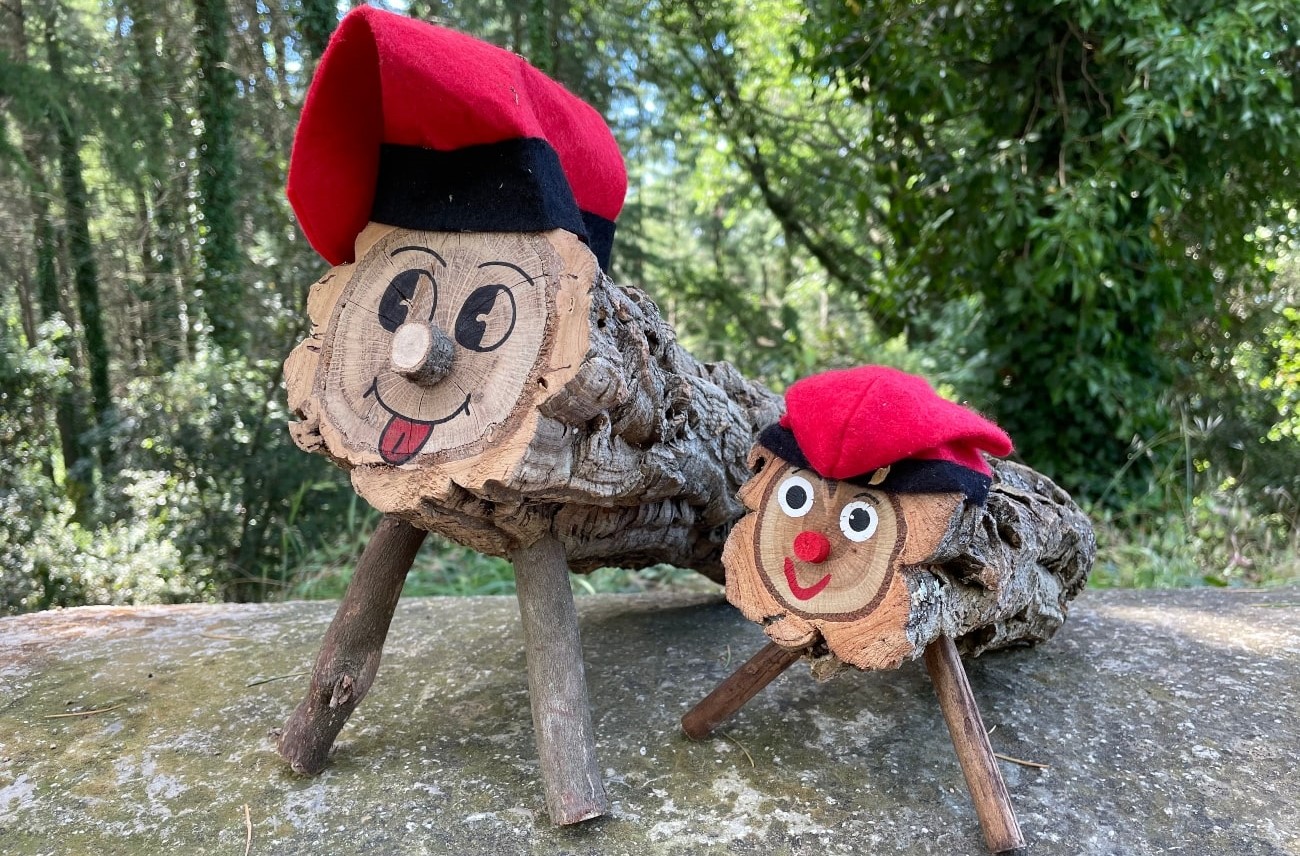
My family and I are hosting two exchange students from Barcelona for the next two weeks, and within hours of meeting them, we learned about Caga Tió, a cultural tradition that, as they explained it to us, brought laughter to their faces. “It sounds really weird, right?” they asked.
We knew that a lot of people in Spain celebrate Three Kings Day on January 6 more than Christmas, but our guests shared that they do have a Christmas Eve/Christmas Day tradition. As one of our guests explained, they get a log from the woods – Caga Tió – bring it into their home, and paint a face on it (or, more commonly these days, they buy a pre-painted one). Each day they ‘feed’ the log – putting fruit and other foods in front of it, which mysteriously disappear overnight – until, on Christmas night, they place a blanket on the floor behind the log, sing a traditional song, and then… beat the log with sticks until it breaks apart (think of a piñata). Kids are then asked to leave the room to pray for a few minutes, and when they come back in, the blanket on the floor is bulging – underneath are nougat candies known as turrón, and… presents! Because of the beating and the threats in the song, the log has, it seems, pooped out the candy and presents, because yes, that’s right, Caga Tió translates as “The Poop Log.” (You can read a great piece on NPR’s website about Caga Tió, including the full song that is sung while beating the log.)
The next morning we discovered another Catalan tradition, though this one was more routine – a breakfast of toast covered with olive oil and sugar. All of which reminded me of some of my own cultural traditions that I gained new perspective on when I moved outside of my culture. (This week I passed a milestone – I have now lived more than half my life in the US – and yet I still discover traditions and norms that people here didn’t grow up with.)
Perhaps you know about Guy Fawkes Night – a British tradition that I’d never given much thought to until moving from Britain to the US. The legend goes that on November 5, 1605, a group attempting regime change in England after decades of religious persecution attempted to blow up the House of Lords, where King James was due to officially open parliament (the plot was intended as the prelude to a popular revolt during which King James’s nine-year-old daughter, Princess Elizabeth, was to be installed as the new head of state – this was not revolution in the way we typically think of it).
A week before the event, an anonymous letter tipped off the authorities, and during a search on November 5, Guy Fawkes was discovered guarding 36 barrels of gunpowder – enough to reduce the House of Lords to rubble – and arrested. While he was not the leader of the group, his name became synonymous with the event, and four centuries later, Guy Fawkes night is celebrated each November 5 with fireworks (commemorating the foiled plot) and the burning of an effigy of Guy Fawkes himself on a huge bonfire – something that takes place in towns and villages across England.
Whether you see Guy Fawkes and the other members of the group as terrorists, revolutionaries, or freedom fighters depends on your perspective (a theme that has resurfaced with the the killing of UnitedHealthcare’s CEO), but regardless of perspective, burning an effigy of a real historical figure is a strange tradition, and children in England take part in every year without questioning it. It was only when I moved to the US and explained it to others that I realized just how strange it sounded, and how much it reinforced the idea of an indomitable hierarchy of power.
I wonder how many of us have cultural – or family – traditions that we have never looked at from an outsider’s perspective. This might come up when we enter a serious relationship or move to a new culture – but it might also come up in the workplace as we work with a new team, switch roles, or collaborate with another department. Sometimes we think we know what would be considered ‘normal’ in a culture, only to find the results of our actions aren’t what we expect. But by engaging on a journey of discovery – to be curious about others’ experiences and their cultures – we might find that we gain a new perspective on our own experiences too.
This Week’s Tip:
In amongst the busyness of December, take time to ask your team and your colleagues about their culture’s holiday traditions – this could be their family culture, their diasporic culture, or a local/regional/national culture. What holidays or traditions helped mark the stages of a year when they were growing up, and which ones do they still celebrate now? What has continued to be important to them, and what has changed to become more (or less) important?
Try this out this week, and let us know how it goes. We’d love to hear from you!
You can subscribe to our feed here, or sign up for our weekly newsletter to get these articles directly in your inbox.
 Building Bridges Leadership