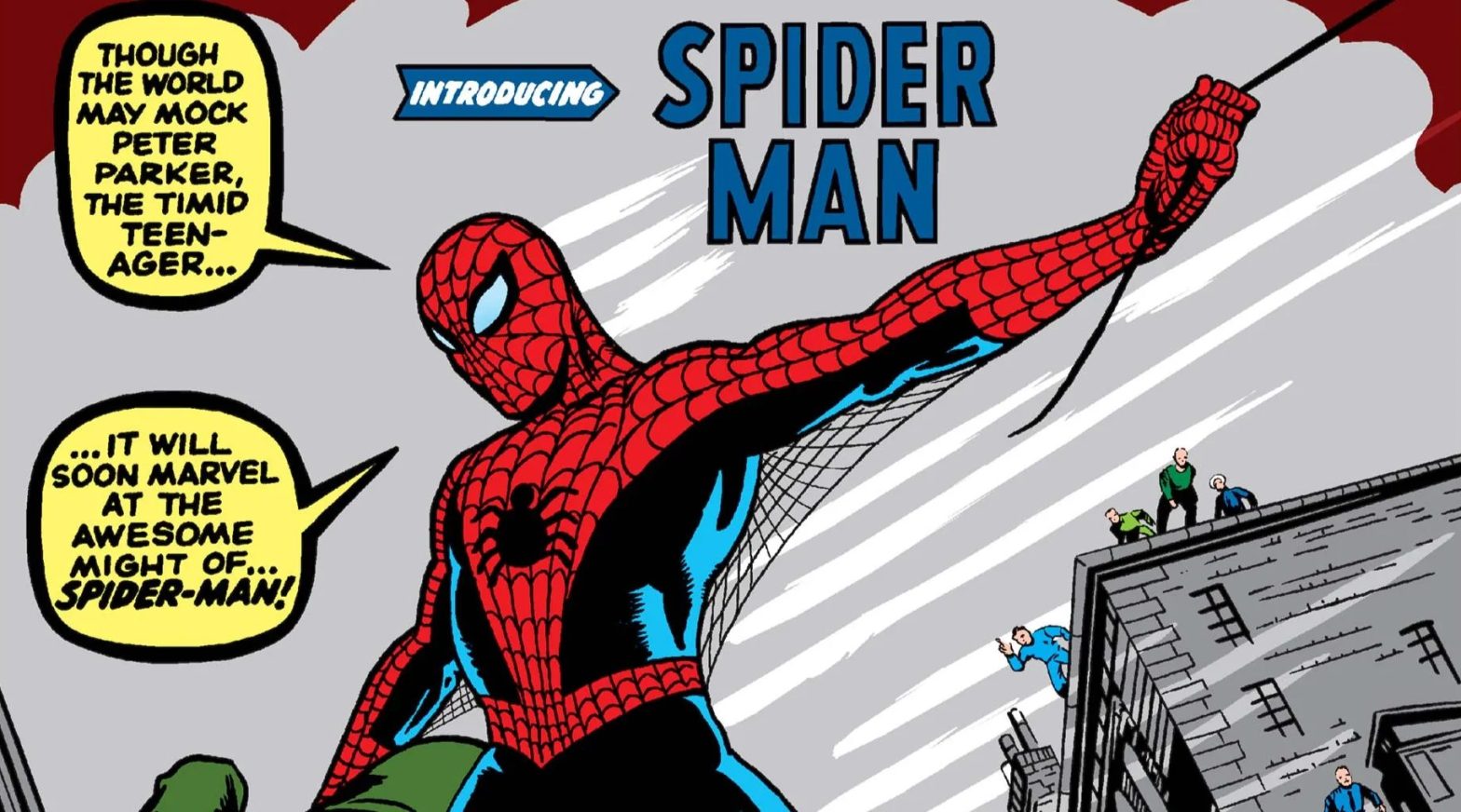
With Spider-Man: Brand New Day making more than a billion dollars worldwide in just seven days, and breaking all kinds of records along the way, now seems like a good time to look back at Spider-Man’s origins, and what we can learn from them.
No, not the radioactive spider, Uncle Ben’s death and the resulting maxim “With great power must also come great responsibility” (although that last one feels like something people around the world would do well to keep in mind!). I’m actually thinking more about how Spider-Man (and the other original crop of Marvel Comics characters – the Fantastic Four, the Avengers, the X-Men, Daredevil, and so many others) were created, and how their stories were told. “The Marvel Method,” as its known.
Let’s take Spider-Man as an example. Spider-Man was created by Steve Ditko and Stanley Martin Lieber; better known to the world as Stan Lee. Lee scripted, edited, and art-directed almost all of Marvel’s series throughout the 1960s, including responding to readers’ thoughts on letters pages, writing a monthly column called “Stan’s Soapbox“, and writing endless promotional copy, often signing off with his trademark motto, “Excelsior!” (which also happens to be the New York state motto). While he became a beloved figurehead, there was often disagreement about the extent of his contributions in character creations. Spider-Man’s creation itself has long been disputed, but it’s clear that artist Ditko (who also co-created Doctor Strange with Lee) designed the look of both Spider-Man’s costume, and of Peter Parker himself, which all fed into the character’s popularity and mass appeal. Lee, regardless of the specific details, was involved to some degree in the creation, and wrote the first 100+ appearances of the character that fleshed out the character in depth.
How this writing took place, though – this is the Marvel Method. Marvel Comics was committed to getting each of their dozens of comics out on a monthly basis; for their competitor, DC, this meant inconsistency in writers and artists, or even reprinting older stories. Lee didn’t want this for Marvel.
Given that he was in charge of so much of Marvel’s publication schedule, Lee did not have time to create a full page-by-page script for each comic he worked on (which had been traditional in the comics industry to this point). Instead, he usually met with the artist to throw some ideas back and forth, and then he typed up the outline for the full 22-page story onto a single page (or two), often including notes or ideas for the artist (later Marvel writer Brian Michael Bendis – co-creator of the Miles Morales Spider-Man – often describes his scripts as having only one audience member; the artist). An example of this is his story outline for the first issue of Fantastic Four, which kick-started the Marvel Universe with art by Jack Kirby.
The artist, whether Kirby, Ditko, or someone else, would then draw the full story, pacing it how they saw fit, and adding in character interactions and details along the way. The drawn pages would then come back to Lee, who would interpret what he saw (sometimes incorrectly!) and add word balloons to add dialogue and narration; the final story details. In effect, the “script” could only be reverse-engineered.
To some degree, this same Marvel Method happens in TV writers’ rooms, where so much collaboration happens that the group becomes somewhat of a hive mind, and often no-one can quite remember whose ideas were whose. So perhaps it’s not so surprising that the various elements of character creation are lost to the hive mind; when people are working together with shared purpose, ideas aren’t so closely linked with individual people. (That said, Lee’s name became synonymous with Marvel and known by people the world over; many of his collaborators did not share the same level of acclaim, fame or fortune that they earned, so some upset is reasonable to expect.)
The Marvel Method also connects with the “Thanksgiving model” of leadership I post about every November – the idea being that a leader comes in with a central vision and invites collaborators in to contribute in additive and complimentary ways (like the sides that people bring to a turkey dinner). There is collaboration and sharing of ideas here that leaves the end result better than if the ideas were handed down fully-formed.
So what can we learn from the Marvel Method that could be instructive to our own leadership moving forward?
This Week’s Tips:
- Consider trying out the Marvel Method with a direct report on a new project. Try sitting with them for a collaborative conversation in which you each share your ideas. Afterwards, you write up your own brief summary ‘outline’ of how you envision the project, but invite their collaboration as the ‘artist’ to flesh it out into the full story. Be available throughout the process, but don’t jump in too much – don’t build their IKEA furniture for them! – and allow them the dopamine rush of success at the end. You can then add details (the ‘word balloons’ and ‘narration’) without taking away from their work; think of it as collaborative overlap instead of interrupting!
- Hold your ideas loosely. Part of working collaboratively is allowing some ideas to fade away, and not holding on too tightly to whose idea is whose. Unless you’re creating a multi-million dollar character or other intellectual property, you’re generally going to enjoy working with other people more if your ideas build on each other and you can let go of how much credit you each should receive. This is always easier said than done, and in some work environments you might need to make sure you receive the credit, so this is not a blanket statement, but wherever it feels safe and appropriate to do so, allow the credit to go to the group or partnership rather than directly to you.
Try the Marvel Method out this week, and let us know how it goes! We’d love to hear from you.
You can subscribe to our feed here, or sign up for our weekly newsletter to get these articles directly in your inbox.

