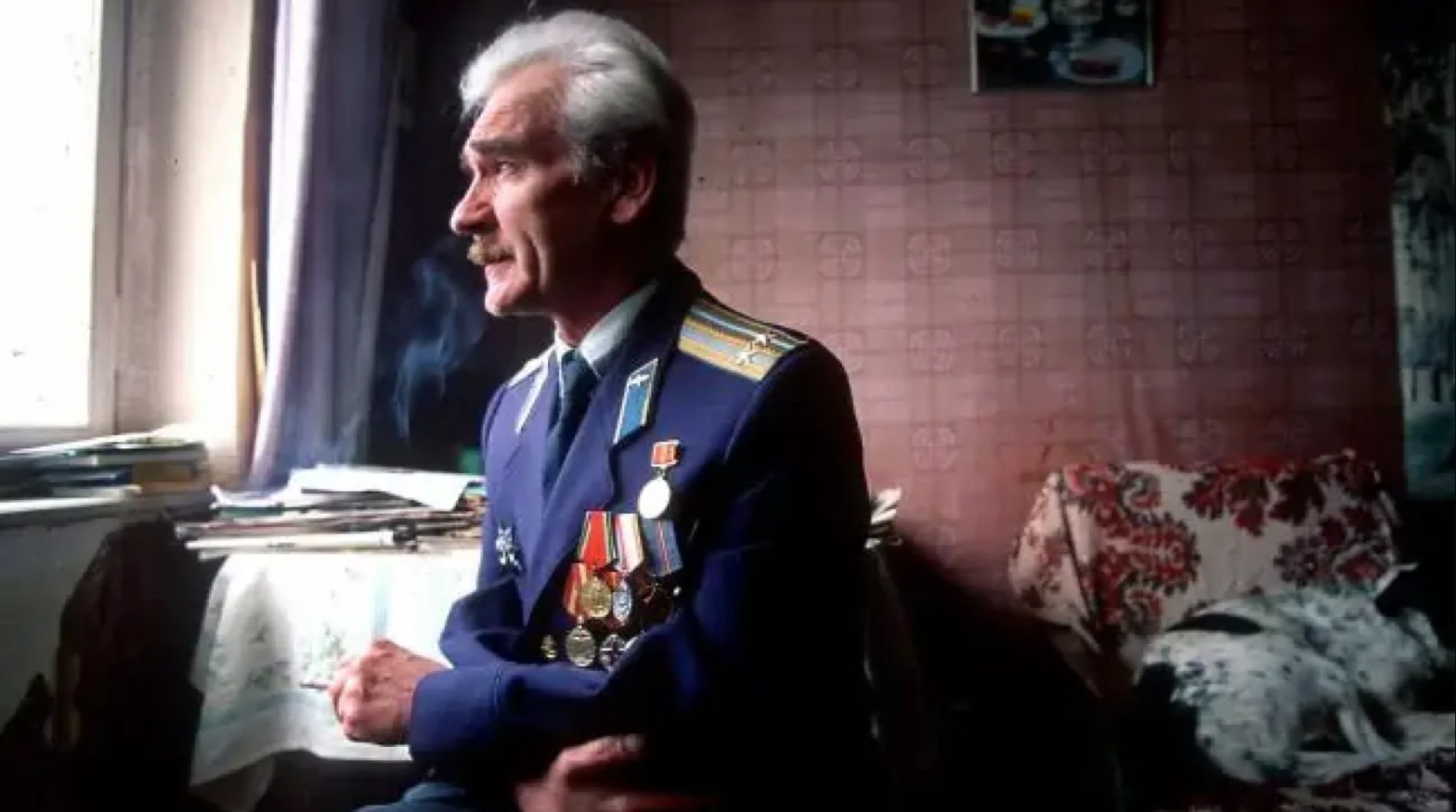
Have you heard of Russian lieutenant colonel Stanislav Petrov? Maybe not. Or do you recognize his name in Russian, Станислав Петров? Unlikely. His name is not widely known around the world, and yet he may well have saved it – by doing nothing! Or more correctly, by disobeying orders and choosing not to take action. Petrov’s monumental choice wasn’t even made public for fifteen years after it happened, when his superior, Colonel General Yuriy Vsyevolodovich Votintsev, published his memoirs in 1998.
So what did Petrov do that was so important? On September 26, 1983, just three weeks after the Soviet military had shot down Korean Air Lines Flight 007 in the midst of the Cold War, Petrov was the duty officer at the command center for the nuclear early-warning system. During his shift, the system reported that a missile had been launched from the United States, followed by up to four more. Time was of the essence. The protocols in place dictated that Petrov should immediately notify his superiors, who would then make the decision to retaliate. Instead, Petrov decided not to notify them, and to take time to seek further confirmation.
Why? As Petrov later said in interviews, despite the heightened tensions of the time, the reports didn’t feel trustworthy. He had been told to expect an all-out assault; a strike of only five missiles in total seemed illogical. In addition, the launch detection system was new; the message passed through 30 levels of verification too quickly for him to consider it reliable.
Even so, it would be reasonable to expect he might pass this information along to his superiors (as his colleagues on other shifts might have done – he was the only one in the role to not have purely military training) while seeking further evidence. But he chose not to. And in making that choice, he may well have prevented nuclear armageddon.
Nuclear security scholar Pavel Podvig argues that, while Petrov did the right thing, “there were at least three assessment and decision-making layers above the command center of the army that operated the satellites”, so Petrov’s report would not have necessarily led to a nuclear launch. But Cold War nuclear strategies expert Bruce Blair sees things differently. Speaking to Dateline NBC in 2000, he said, “The top leadership, given only a couple of minutes to decide, [and] told that an attack had been launched, would make a decision to retaliate.” Elsewhere, Blair expounded that the U.S.–Soviet relationship had deteriorated to the point where “the Soviet Union as a system—not just the Kremlin, not just the KGB—but as a system, was geared to expect an attack and to retaliate very quickly to it. It was on hair-trigger alert. It was very nervous and prone to mistakes and accidents. The false alarm that happened on Petrov’s watch could not have come at a more dangerous, intense phase in US–Soviet relations.” Oleg Kalugin, a former KGB chief of foreign counterintelligence, also said “The danger was in the Soviet leadership thinking, ‘The Americans may attack, so we better attack first.'”
The false alarm – caused by a combination of high-altitude clouds and the type of satellite orbit used – exposed a serious flaw in the Soviet early warning system, and was subsequently covered up. Petrov himself lived a quiet life after his defining moment. He was initially praised for his actions and promised a reward, but was then reprimanded for improper filing of paperwork. Likely because of the embarrassment the whole incident caused his superiors, Petrov was reassigned to a less sensitive post, before taking an early retirement.
So while we might not be faced with the same world-shaping choice in our workplace that Stanislav Petrov faced in his, what can we learn from his example?
This Week’s Tips:
When faced with shocking information or a tough decision to make, remember Stanislav Petrov’s approach:
- Take your time and consider the evidence you have. Is it trustworthy? What does it tell you? What are other perspectives from which to view this evidence?
- Seek other data points. Does other evidence support what you first saw? Does it contradict it? Does it add other nuance to the situation?
- Consider who would (and would not!) be useful to talk this over with. Who would make a good thought partner, or coach, or guide, or trusted advisor? Who might offer different perspectives and challenge you to see your own blind spots? Avoid gossip – share only what is necessary to help you think through next steps.
- After a lot of consideration and consultation, if disobeying orders and going against the cultural expectations is called for, don’t take this action lightly, and know that you have countless role models throughout history, even if their names are sometimes kept hidden.
- Embrace humility and take yourself out of the equation. Think about what needs to be done, and less about what you should do. Petrov himself decried the term “hero,” saying “I was simply doing my job, and I was the right person at the right time, that’s all.” He said he was the only person to have ever faced this decision, and anyone else might well have done the same thing given the situation.
- In the words of Eliezer Yudowsky, who proposed September 26 as an annual “Petrov Day,” “Wherever you are, whatever you’re doing, take a minute to not destroy the world.”
Try these out this week, and let us know how it goes – we’d love to hear from you!
As always, you can subscribe to our feed here, or sign up for our weekly newsletter to get these articles directly in your inbox.

