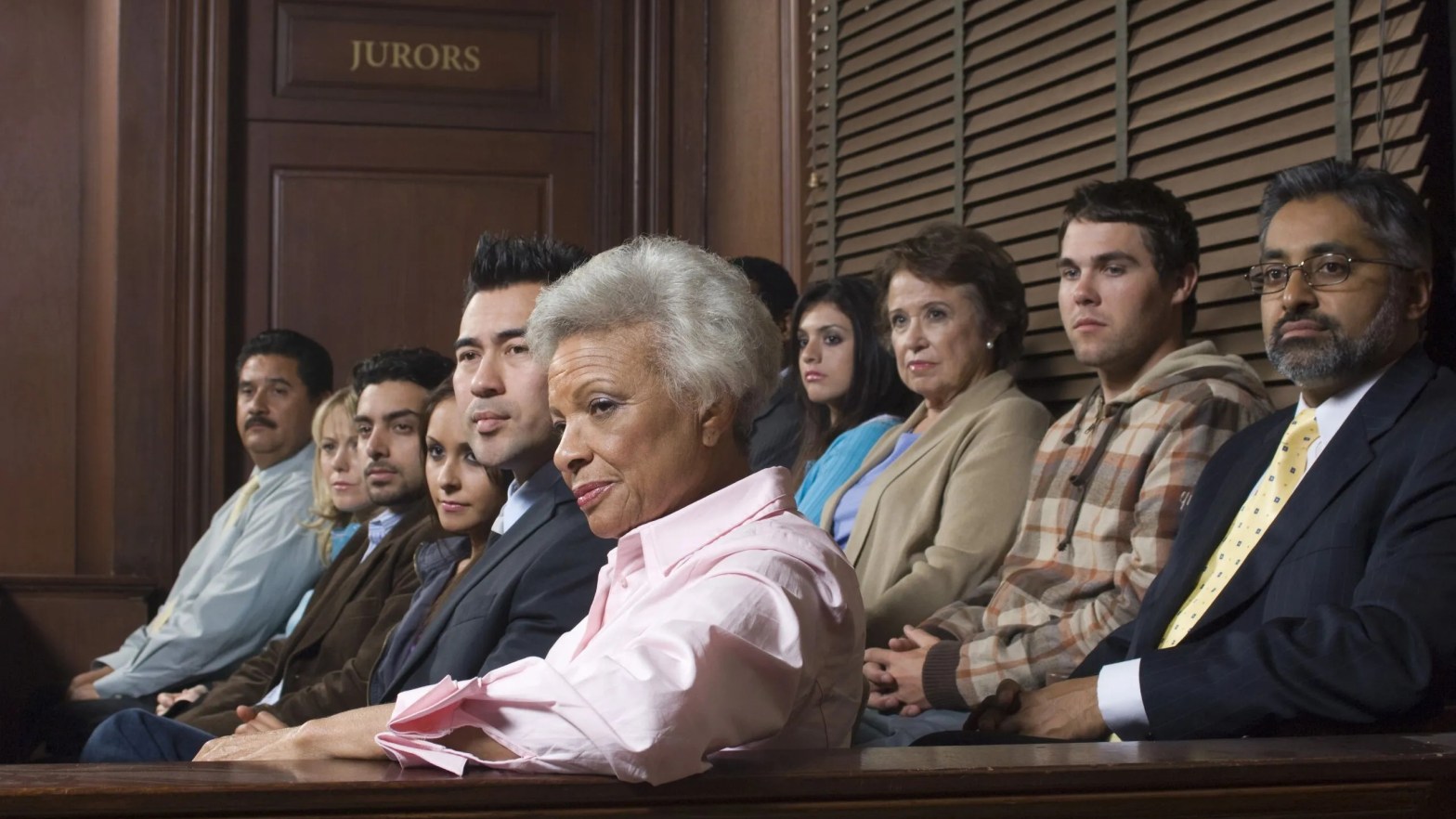
Have you ever served on a jury? If so, what was your experience like? I’ve been called five times in all. In the first few days of 2025, I was called to serve on a grand jury. For a number of reasons I was released from serving, and I was grateful – In Massachusetts, a grand jury commitment is three months long, with the potential for longer; a challenge for anyone to plan around, and especially for someone who’s self-employed with no benefits. While learning more about the judicial system and the make-up of juries, I heard a statement that had never occurred to me, but that in retrospect seems not at all surprising: “Diverse juries remember more facts, and reach more accurate verdicts.”
I wonder how that statement lands for you? For me, hearing that statement immediately had me researching – while it sounded true, I wanted to know more: What were the studies? What was the data? Sure enough, there is plenty of evidence to support this – diverse juries deliberate longer than homogeneous ones, and their verdicts are less likely to be overturned later. The Equal Justice Initiative recently posted a Unreliable Verdicts: Racial Bias and Wrongful Convictions, a report digging deep into some of the 200 exonerations of death row inmates, all of which had initially been decided by non-diverse juries.
Most studies focused on White and Black jury members only, but the data is still illuminating. In a 2006 study in the Journal of Personality and Social Psychology, Tufts University’s Dr. Sam Sommers (who passed away in March, 2025) found that White jury members cited more case facts and made fewer errors when serving on diverse juries rather than all-White juries. In a 2019 study in Law and Human Behavior looking specifically at White and Black jurors, Dr. Liana Peter-Hagene found that “[t]he mere presence of Black jurors can motivate White jurors to contribute more factual comments during jury deliberation: Although all-White juries performed better when they judged a White defendant [than they did when judging a Black defendant], diverse juries performed equally well regardless of defendant race. This happened despite the fact that interracial interactions tend to require more cognitive and self-control resources than same-race interactions… [perhaps] because people are concerned with either appearing racially biased or with being the target of bias.”
So the result is not only that minority jury members bring in different perspectives, but also that majority jury members consider different perspectives and remember/articulate details of the case that they might not have done in a homogeneous jury of people who shared their identity. Of course, diversity in a group is much more than Black and White, and much more than even the full range of racial identity. Neurodiversity, diversity of political opinion, cultural upbringing, gender identity, sexuality, socioeconomic status, disability status, nationality, first language… all of these and more are part of someone’s social identity, and while I have not been able to find much research on these aspects of diversity in juries, I would not be surprised to find similar results if and when that research is published.
So… how does this connect with your team? It might be fair to say that the decisions our teams make don’t feel quite as impactful as sending someone to jail or putting them on death row, but if having a diverse jury can make a better and more accurate decision, surely that’s worth pursuing on your own teams too?
This Week’s Tip:
Consider that what is true in juries might be true for your teams also. If you find yourself on teams or in groups which could be considered homogeneous, make a point of changing that – as well as bringing in others’ perspectives, it will also cause you to think differently and make better decisions yourself! This isn’t to say you shouldn’t connect with others like you – there is huge value in affinity groups, as we’ve written about before – but even affinity groups based on racial identity have diversity in plenty of other ways. Invite other perspectives, and check your understanding by summarizing what you heard (even if just to yourself) and asking questions. Pay attention to what happens to your own perspective as you do – you might find that you look at things differently than you did to start with, but you might also find that you build some bridges along the way.
Try this out this week, and let us know how it goes – we’d love to hear from you.
As always, you can subscribe to our feed here, or sign up for our weekly newsletter to get these articles directly in your inbox.
 Building Bridges Leadership