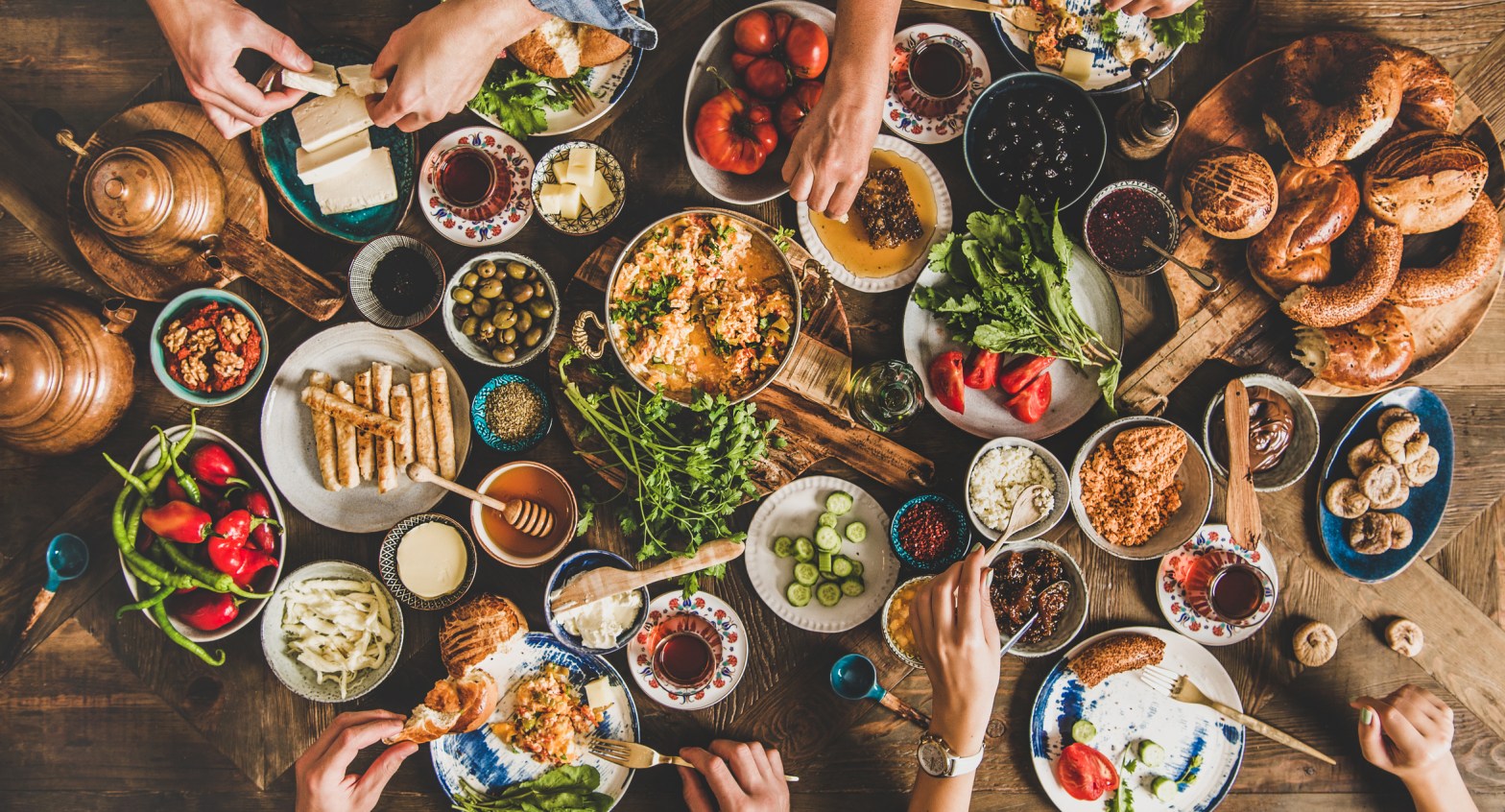
Have you ever made a new friend over a meal? Perhaps at an event – like a wedding, a banquet, or party where you didn’t necessarily get to choose who you were sitting next to? Whether that interaction turned into an ongoing long-term friendship or not, did you find that over the course of eating together, you found shared points of interest; things you had in common with each other and/or interest in each other’s unique experiences?
Sharing a meal has been a staple of community building for thousands of years, but it’s easy to forget that in the hustle and bustle of our workplace. And when we do eat together, we might have ulterior motives. Keith Ferrazzi’s bestseller Never Eat Alone, And Other Secrets to Success, One Relationship at a Time makes a pitch for eating lunch with colleagues not so much for community building, but for relationship building that will result in a successful climb up the career ladder. Elements of that mesh with micro-mentoring and the AMA ideas we’ve shared before; there is value there, of course – but I wonder if we’re missing the point of eating together.
There is something undefinable about eating the same food – or at least around the same table – that changes the tone of people’s speaking and listening; shared meals are very different from meetings (which may be why eating with someone else was the topic of our very first blog, in January 2020). As well as countering the widespread loneliness epidemic, eating with others allows us to hear different experiences and different perspectives. It can give us opportunities to check our assumptions, to hear and tell personal stories, to ask open-ended questions, and to help us to understand that our experience of the world is not the experience of the world. Sometimes the food itself reflects cultural or family histories and can facilitate personal or historical stories (food historian Dr. Frederick Douglass Opie explores this deeply on his food blog and books).
As we approach the 2024 Presidential Election, I’m reminded of The People’s Supper, a grassroots initiative equipping people to host a meal and facilitate intentional conversation with a small group of people with diverse life experiences and viewpoints, which began in response to the division exposed by the 2016 election. The aim is that people leave with broadened perspectives and understanding of “the other.” Since 2017, The People’s Supper has brought more than 10,000 people together around dinner tables in over 100 cities and towns nationwide, in partnership with dozens of local government & civic groups, faith-based organizations and communities, colleges & universities, and workplaces. They operate using the adage, “Social change moves at the speed of relationships. Relationships move at the speed of trust.”
How can this be helpful for you this week?
This Week’s Tip:
Find opportunities to eat with others at work this week. There are lots of different ways to do this. There seems to be particular value in sharing the same food all together (family style), which could work at a restaurant, or with a home-cooked meal to share, but there are many reasons this may not work for people (allergies and dietary preferences being prime among them). It could be structured so that everyone brings food to share that represents them or their culture in some way. It could mean simply sitting around and each eating whatever normal lunch you each brought with you, with no structure ahead of time – if so, a question to ask might be “what kinds of food are examples of what your family or culture ate when you were growing up?” Perhaps you already eat with people each day – if so, great! Try to find a new place to sit or new people to sit with a few times this week, for the chance for a new perspective.
Try this out this week, and let us know how it goes. We’d love to hear from you!
You can subscribe to our feed here, or sign up for our weekly newsletter to get these articles directly in your inbox.
 Building Bridges Leadership