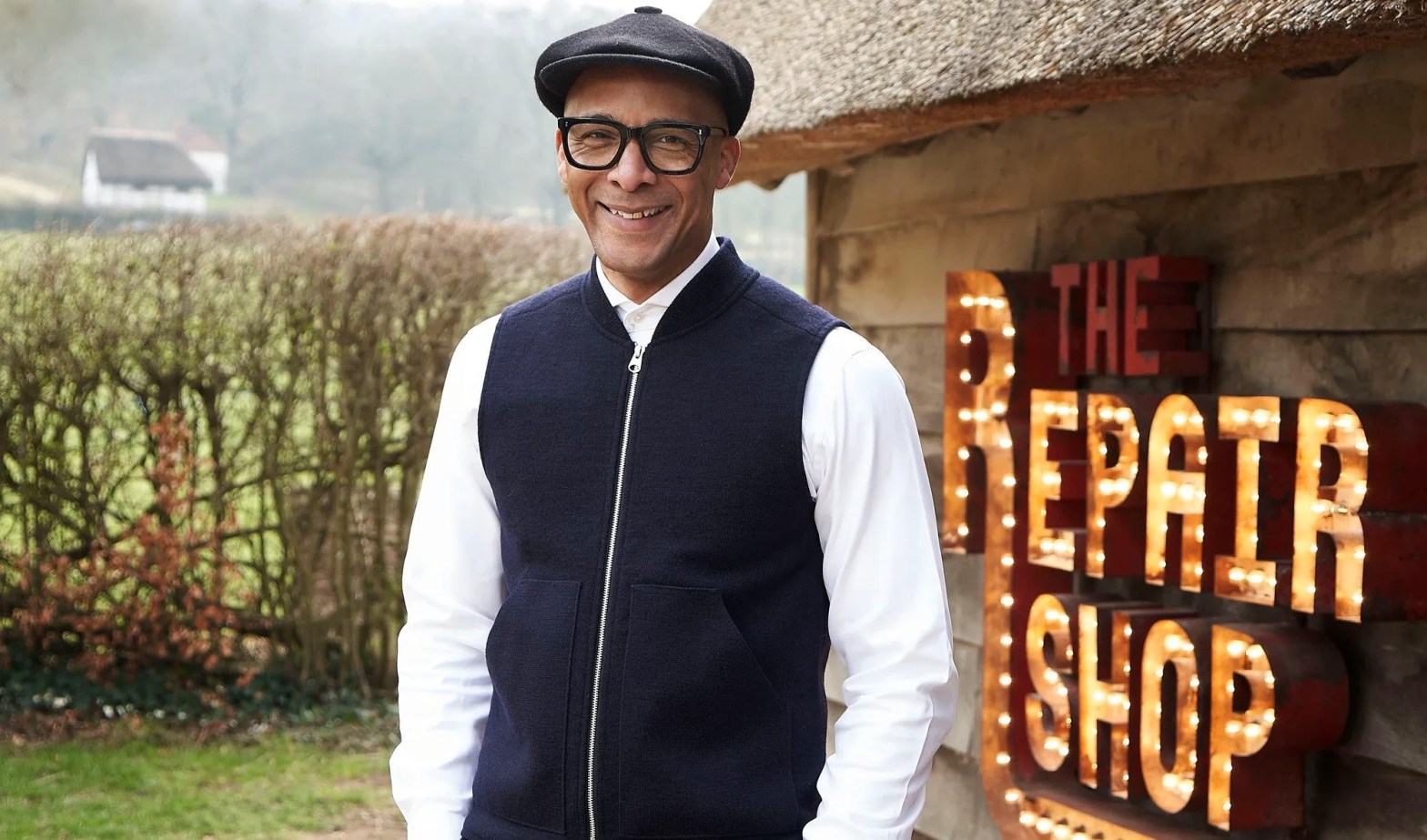
Image: BBC/Ricochet Ltd/Cody Burridge
If you live in North America, chances are high that you’ve never seen the BBC show The Repair Shop. Settled in a picturesque English countryside barn, the Repair Shop is just what you might imagine from the name. In each episode, three or four people bring in family heirlooms that represent their history and lineage in some way – often something that carries treasured memories of a lost parent or other close relative to be restored by a range of deeply talented craftspeople, each of whom focuses on carpentry, metal, clock mechanisms, soft toys, upholstery, paper, leather, and so on. The work they do is meticulous, gentle, and detailed in a way that is calming to watch, managing to restore an item to its former glory while also including and honoring the wear and tear it received from loving use. The end result as the item is re-presented to its owners is quite often stunning. The show does a few things beautifully: one is to sit quietly with their tearful reactions.
The show’s host and creator, furniture restorer Jay Blades, is masterful at asking open-ended questions and allowing the person to answer in their own time and in their own way. We could all learn a lot about how to do that well by watching him. But more impressive, and arguably more helpful, is not something you would pick up on from watching the show at all, because it’s all behind the scenes.
As is the case with a large number of entrepreneurs, Blades is dyslexic, and still struggles with reading (he filmed a documentary in 2021 titled Jay Blades: Learning to Read at 51), but dyslexic thinking enables people to navigate life differently and see things that others might not (something we’ll return to in a future article). In the case of The Repair Shop, Blades put together a team of people who were incredibly talented, but who – in many cases, at least – had also been through some wear and tear of their own, who had been damaged in some way, and needed some repair themselves. Whether in recovery from alcoholism, or grief, or depression, these stories are not part of the show; only the Repair Shop specialists themselves share their stories elsewhere, sharing what a lifeline the show was for them. It allowed them to experience their own repair with dignity and grace.
I wonder if our own workplaces could benefit from being more like The Repair Shop. As leaders, could we extend that same level of dignity and grace to allow our team members to feel respected and valued in spite of the challenges they’re going through, or the mistakes they’ve made?
To be clear, this isn’t to suggest that our workplaces should take the place of recovery programs or other appropriate resources for those in need. And it’s not to suggest that we should ignore behavior that is inappropriate, hurtful, or problematic. But there is a shared human experience of highs and lows, and some people’s lows are hard for them to move past. What if we could take the same meticulous, gentle, and detailed approach that The Repair Shop takes with each member of our team to help them succeed and move forward? What would that look like?
This Week’s Tip:
Consider what a Repair Shop approach to your team might look like this week and moving forward. How could you extend dignity and grace to the people on your team? What would that look like in hiring decisions and interviews? Consider that everyone has a story you don’t know – how would that change how you treat them?
Try this out this week, and let us know how it goes! We’d love to hear from you.
You can subscribe to our feed here, or sign up for our weekly newsletter to get these articles directly in your inbox.
 Building Bridges Leadership