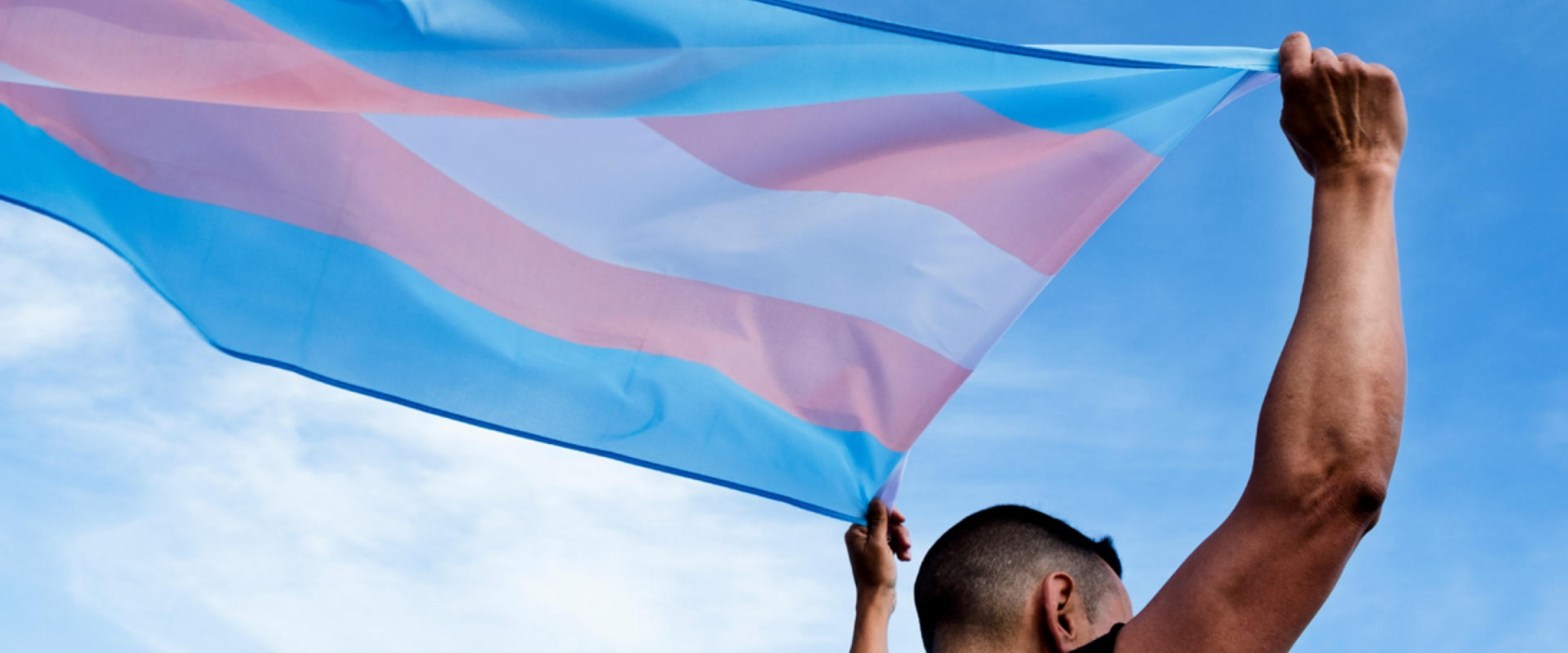
Have you ever felt judged by others (at work or elsewhere) because of beliefs you hold, or actions you choose to take, or because of an aspect of your identity? Have you ever heard yourself be lumped in with a group that’s being discussed, without anyone else in the conversation knowing you’re part of that group? How does that feel when it happens?
The holiday season brings chances for a lot of gatherings with family and friends – and for many of us, some unstructured social time with co-workers also. While many conversations will be personal or surface-level, conversations often veer towards national or international topics, usually brought up by someone who expects – or is looking for – agreement for their own beliefs: topics like the Israeli-Palestinian conflict, the migrant crisis, or “the trans debate.”
“The trans debate” is a term widely used in news media over the last several years, with a broad application covering everything from gender fluidity, gender dysphoria, heteronormativity, drag queen story time, sex education in schools, bathrooms, sports, prisons, dictionaries, science, and even Harry Potter. As the number of trans and non-binary athletes increases (more than 35 LGBTQ+ athletes competed in the 2022 Winter Olympics, including the first ever nonbinary Olympian, figure skater Timothy DeLuc), more questions are being asked about the binary male/female categorization of athletes, and if that is to continue, how (or even whether) trans athletes should be included.
But there is real pushback on the term “trans debate.” A viral post shared millions of times on social media channels states “There is no ‘trans debate’ – you’re just transphobic.” Another post says “‘Trans debate’ is the newest iteration of such classics as ‘the Jewish question’ and ‘the Negro problem.’ People aren’t debatable.” Another states, “people existing is not something others get to debate.” There can be debates about ideas, about policies, about how best to support people… but not about the people themselves. And ideas, policies and activism abound! And believe it or not, not everyone in the trans community agrees about everything – because they are each unique people. Like any people group, the trans community is not a monolith.
Similarly, the Jewish community is not a monolith. Nor is the Palestinian community. Or the Russian community, or Trump supporters, or Democrats, or Black Americans, or unhoused people… and so on and so on. Each member of each group has their own unique stories. There is diverse unity, but that comes from unique diversity.
So how do we move away from “the [x] debate” in the coming weeks?
This Week’s Tips:
- Seek out individual stories from people groups outside of your own identity. Are you straight and cisgender? Read or listen to stories from queer and trans individuals. Do you find yourself identifying more with Israel in the current conflict? Read or listen to stories from Palestinians – either contemporary stories, or historical stories from before this year. If you’d like something more in depth than articles, blog pieces, or interviews, look for memoirs or historical fiction, which can be a great resource for expanding your perspectives and challenging your center of gravity.
- Write down some “wondering” questions as you engage with these stories – what do they prompt you to think about that you would like to learn more about? How could you go about doing that? Do you know real people in this community? Now that you’ve engaged with a story, ask if you could talk about it with them, and whether/how much it matches with their own experiences. (Be wary of doing this without doing your own reading/research first – some people might appreciate being asked, but it can be a heavy and unwelcome burden to feel like you’re being asked to represent the experiences of a whole people group.)
Try these out this week, and let us know how it goes. We’d love to hear from you!
You can subscribe to our feed here, or sign up for our weekly newsletter to get these articles directly in your inbox.
 Building Bridges Leadership